
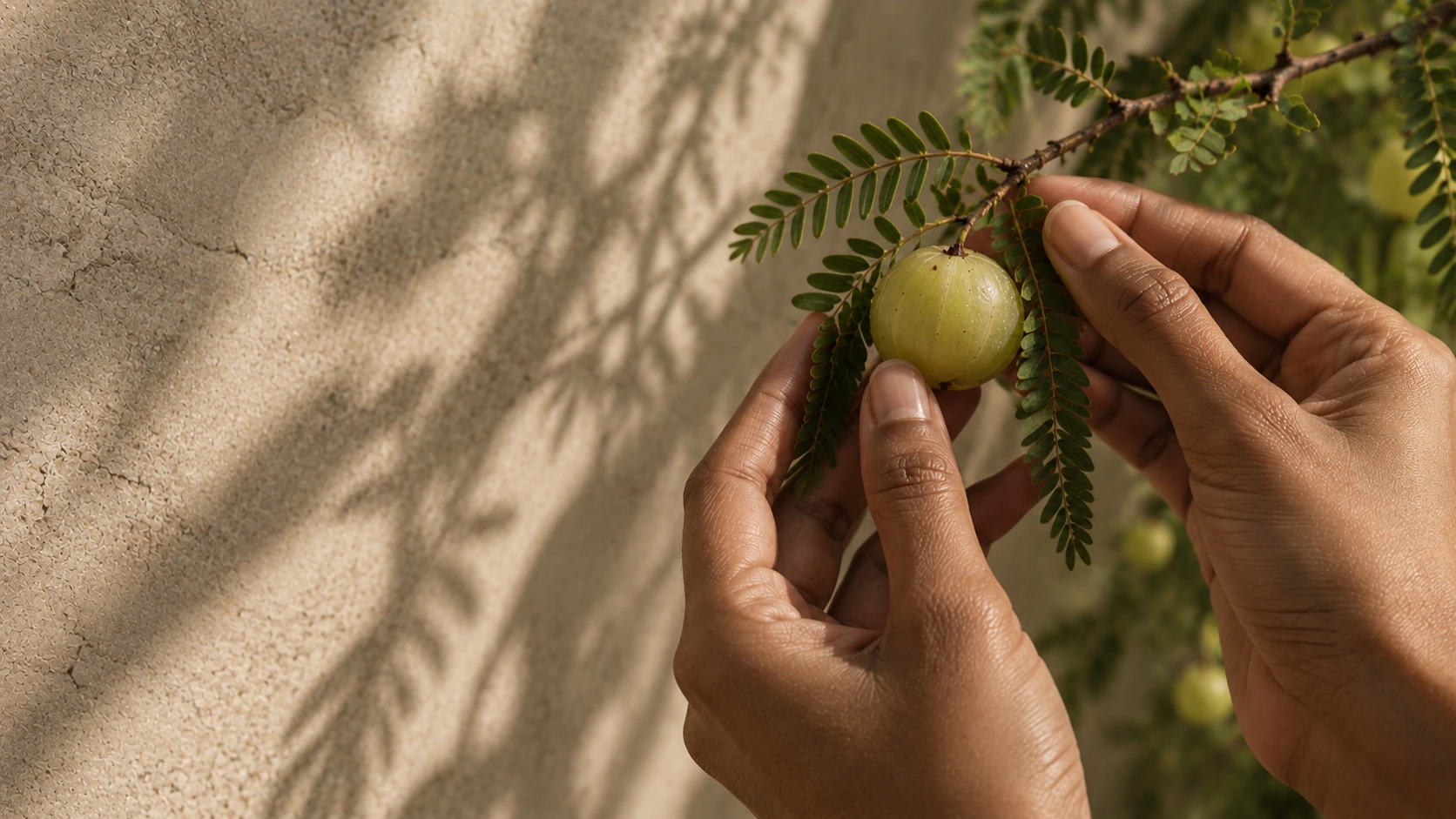
Pitta skin, in Ayurvedic tradition, is skin that tends to feel warm and look easily flushed, especially in heat, after exercise or with strong products. Ayurvedic-inspired care for Pitta skin is all about cool and calm: lukewarm water, gentle cleansing, refreshing mists and light, soothing moisturisers.
What Pitta skin looks and feels like
Pitta combines the elements of fire and water, and tradition links it with heat, intensity and sharpness. On the skin, those qualities are often described as warmth, a tendency to look pink or flushed, and a sensitivity to harsh products or too much sun.
Pitta-type skin is frequently medium in texture, sometimes a little oily through the T-zone, and quick to feel hot after a workout or an afternoon outdoors. Many people with this skin type say their face feels overheated by the end of a summer day.
Ayurveda is a tradition and an inspiration here, not a diagnosis. If your skin is persistently red, sore or uncomfortable, a doctor or pharmacist is the right person to ask.
Why Australian summers call for cooling care
Many Ayurvedic-inspired guides associate the hot months with Pitta, and an Australian summer, with its long days, strong UV and warm nights, makes that idea easy to understand. Heat, sweat and sun can leave Pitta-type skin feeling warm and looking tired by evening.
Tradition answers heat with cooling qualities. That's why botanicals such as rose, aloe vera, lotus and vetiver (khus) are so often linked with cooling rituals, and why gentle, refreshing textures tend to feel so good on this skin type.
The same thinking applies beyond summer. A hot shower, a heated office or a stressful week can all leave Pitta-type skin feeling warm, so the cooling habits below are worth keeping all year.
A cool, calm routine step by step
- Cleanse with lukewarm water. Hot water can leave skin feeling warmer and tighter. Use a mild cleanser and a light touch.
- Mist to refresh. A cooling face mist after cleansing helps skin feel calm and hydrated.
- Moisturise lightly. Choose a soothing, non-greasy cream that absorbs quickly.
- Finish with sunscreen. Apply a separate broad-spectrum SPF50+ sunscreen every morning and reapply as directed.
- Cool down in the evening. Cleanse gently, mist again and moisturise. Keep the routine short and simple.
On especially hot days, keep the morning routine to the essentials and save anything new for a cooler evening. If your skin feels warm after time outdoors, a cool rinse followed by a light, soothing moisturiser is often all it needs.
Everyday habits for Pitta-type skin
- Go easy on exfoliation. Strong scrubs and frequent exfoliating can leave warm, sensitive-feeling skin looking more flushed. Once a week, gently, is plenty for many people.
- Seek shade. Plan outdoor time for the cooler parts of the day where you can, and wear a broad-brimmed hat.
- Keep your mist somewhere cool. A cool spritz on a hot afternoon feels especially refreshing.
- Patch-test new products. Try anything new on a small area first, and introduce one product at a time.
- Notice what warms your skin. Many people find heat, hot showers and stress make their skin feel warmer. A calm evening routine is a lovely way to wind down.
None of these habits needs to be complicated. The spirit of Pitta-inspired care is simply to notice what leaves your skin feeling warm, then choose the calmer, cooler option where you can.
Ayouthveda picks for Pitta-type skin
Ocean Dew Mist brings together lotus hydrosol, marigold, vetiver (khus) and butea, a blend that suits the cooling spirit of Pitta-inspired care. Spritz it as a toner after cleansing or whenever skin feels warm for a cooling, soothing sensation and a soft, dewy, hydrated feel.
Ultra Hydrating Face Emulsion Cream pairs rose and aloe vera in a light, non-greasy emulsion. It helps skin feel soothed, soft and comfortably hydrated without heaviness, and layers easily under sunscreen. It's made for dry skin, so it's a particularly good match for Pitta-Vata blends that feel both warm and dry.
Both pair well with the ideas in our post on aloe vera in Ayurvedic skincare, and you'll find more in the Ayouthveda range. Neither product contains sunscreen, so keep your SPF50+ as the last step each morning.
Frequently asked questions
What does Pitta skin mean?
In Ayurvedic tradition, Pitta is the dosha linked with fire and water. Pitta skin describes a tendency towards warmth, sensitivity and a flushed look, often with some oiliness in the T-zone. It's a traditional way of describing how skin behaves, not a medical category, and many people are a blend of Pitta with Vata or Kapha.
Which botanicals suit Pitta-inspired care?
Tradition favours ingredients with a cool, soothing character. Rose, aloe vera, lotus and vetiver (khus) are classic examples, and they appear in many cooling rituals. In skincare, look for them in light mists and moisturisers that help skin feel refreshed. As always, patch-test first, as botanical ingredients don't suit everyone.
Should Pitta skin avoid exfoliating?
Not necessarily, but gentle and occasional is the rule. Warm, sensitive-feeling skin can look more flushed after harsh scrubs or frequent exfoliating. Many people with this skin type find once a week with a mild product is plenty. Skip exfoliation after a day in the sun, and follow with a soothing moisturiser.
Can I use a face mist during the day?
Yes. A face mist can be used as a toner, a midday refresher or a makeup setting spray. Close your eyes and spritz evenly over your face and neck. Remember that a mist doesn't contain sunscreen, so keep reapplying a separate broad-spectrum SPF50+ as directed when you're outdoors.
This article shares general skincare information, not medical advice. Everyone's skin is different — patch-test any new product on a small area first and stop use if irritation occurs.
Back to the blog