
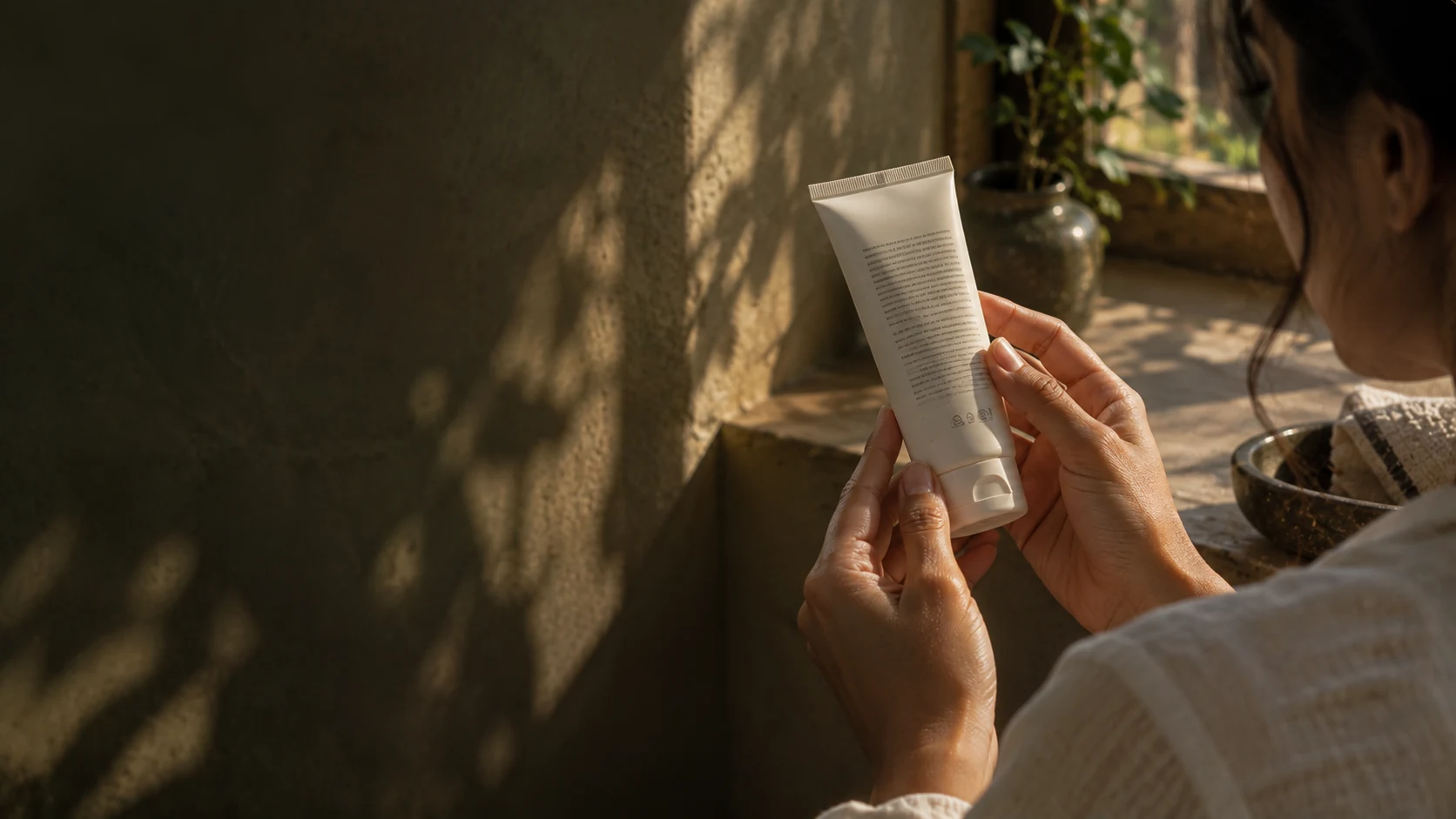
Vata skin, in Ayurvedic tradition, is skin that tends to feel dry, thin and cool, with fine pores and a tendency to feel rough or tight in cold, windy weather. Ayurvedic-inspired care for Vata skin is warm, rich and nourishing: creamy textures, gentle cleansing, oil massage and a steady daily routine.
What Vata skin looks and feels like
Vata combines air and space, and tradition describes it as dry, light, cool, rough and changeable. On the skin, those qualities often show up as a delicate, fine texture, barely visible pores and a tendency to feel tight soon after cleansing.
Vata-type skin can look dull and feel rough when the air is dry, and fine lines may look more noticeable when skin is short on moisture. The good news is that it usually feels much more comfortable with consistent, nourishing care.
Tradition uses the doshas as a way of describing tendencies, not a diagnosis. If your skin is persistently sore, cracked or itchy, it's worth talking to a doctor or pharmacist.
When Vata skin feels driest
Many Ayurvedic-inspired guides link Vata with autumn and early winter, the cool, dry, windy part of the year. In Australia, that might be a frosty Canberra morning, a dry inland winter or a blustery week in Melbourne.
Seasons aren't the only factor. Long-haul flights, air-conditioning, hot showers and heaters can all leave skin feeling parched. Vata-type skin also tends to notice irregular routines, so a consistent rhythm of cleansing and moisturising is part of the care.
A nourishing routine step by step
- Cleanse gently. Use lukewarm water and a mild cleanser. In the morning, a simple rinse may be enough.
- Moisturise while skin is damp. Applying moisturiser straight after patting dry helps skin feel softer and more supple.
- Layer for comfort. On very dry days, a light emulsion under a richer cream can help skin feel cushioned.
- Finish with sunscreen. Apply a separate broad-spectrum SPF50+ every morning; winter sun still counts in Australia.
- End the day with a richer layer. A nourishing cream at night, and body butter on arms, legs and elbows, leaves skin feeling soft by morning.
Give your skin a few weeks with a consistent routine before changing products. Vata-type skin often feels its most comfortable when care is steady and predictable.
Warm, comforting rituals from tradition
Abhyanga, the traditional practice of self-massage with warm oil, is one of the best-known Vata rituals. You don't need a full routine to enjoy the idea: a few minutes massaging a rich moisturiser or body butter into your skin after a shower is a lovely way to borrow it.
- Keep showers warm, not hot. Very hot water can leave dry skin feeling tighter.
- Massage, don't rub. Use slow, gentle strokes as you apply moisturiser.
- Add moisture to the air. A humidifier can make heated rooms feel more comfortable in winter.
- Keep a steady rhythm. Tradition values routine for Vata, from regular sleep to a consistent skincare habit.
- Choose soft fabrics. Scratchy wool against dry skin can feel uncomfortable, so layer soft cotton underneath.
Ayouthveda picks for Vata-type skin
Dates & Honey All Purpose Skin Cream is a rich, non-sticky cream for face and body made with dates, honey, cocoa butter, sweet almond oil and coconut oil. It forms a moisturising layer that helps dry skin feel nourished, soft and comfortable, especially through dry winter weather.
Skin Richment Body Butter is a whipped body butter with mango seed butter, moringa seed oil, cocoa seed butter and almond oil. It melts in with gentle massage and leaves skin feeling soft, smooth and supple, which makes it a natural fit for an abhyanga-inspired moment after your shower.
Ultra Hydrating Face Emulsion Cream, with rose and aloe vera, is a lighter daytime option made for dry skin. It helps skin feel soft, smooth and hydrated, and layers easily under sunscreen and makeup.
See the full Ayouthveda range, and if dryness makes fine lines look more noticeable, our guide to caring for the look of fine lines has more gentle ideas.
Frequently asked questions
What does Vata skin mean?
In Ayurvedic tradition, Vata is the dosha linked with air and space. Vata skin describes a tendency to be dry, thin, cool and fine-textured, often feeling tight or rough in cold, windy weather. It's a traditional way of describing skin tendencies, not a medical category, and many people are a blend of Vata with Pitta or Kapha.
Is oil good for Vata skin?
Tradition has long paired Vata with warm oil massage, and many people with dry skin enjoy richer, oil-containing creams and butters. Apply them to slightly damp skin so they spread easily and leave skin feeling soft. On the face, start with a small amount and patch-test first, as very rich textures don't suit everyone.
Can I use body butter on my face?
It's usually best to keep body butters for the body, where skin is often drier and can handle richer textures. For the face, choose a product made for both face and body, or a dedicated face cream. That way you get the comfort you want without a texture that may feel too heavy on facial skin.
Why does my skin feel tight after cleansing?
Tightness after washing often means the cleanser or water temperature is a little harsh for your skin. Try lukewarm water, a milder cleanser and a shorter wash, and apply moisturiser within a minute or two while skin is still slightly damp. If tightness continues, try cleansing only in the evening and rinsing with water in the morning.
This article shares general skincare information, not medical advice. Everyone's skin is different — patch-test any new product on a small area first and stop use if irritation occurs.
Back to the blog